

For many children, speaking in front of an audience can feel intimidating. Whether it is answering a question in class, delivering a presentation or participating in a school debate, the fear of making mistakes or being judged can hold them back. However, public speaking is a skill that can be developed with the right encouragement, opportunities and practice.
At Sunmarke School in Dubai, we recognise the importance of nurturing confident communicators who can express their ideas clearly, think critically and engage meaningfully with the world around them.
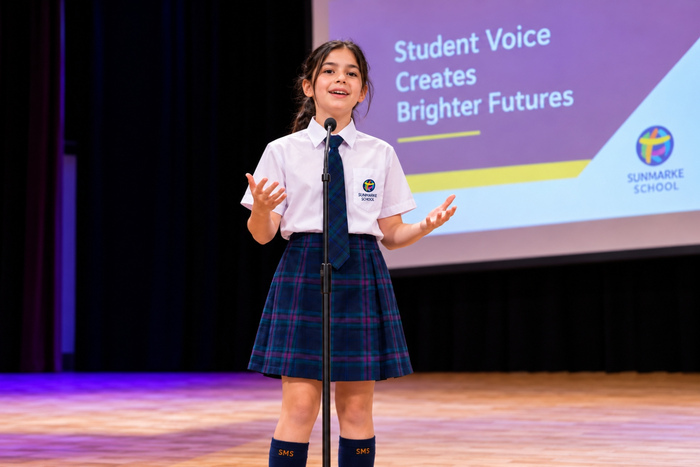
Why Do Children Fear Public Speaking?
Public speaking anxiety is common among children and teenagers. Some worry about forgetting their words, while others feel uncomfortable being the centre of attention. A lack of confidence, limited speaking experience or fear of criticism can make these situations particularly challenging.
The key is to introduce public speaking gradually, creating a supportive environment where children feel comfortable expressing themselves without the pressure of perfection.
Building Confidence Through Oracy Skills
Oracy is the ability to communicate effectively through spoken language. It goes beyond simply speaking clearly; it involves active listening, thoughtful questioning, structured discussions and presenting ideas with confidence.
Developing strong oracy skills helps children articulate their thoughts, participate in classroom conversations and engage respectfully with different perspectives.
Parents can encourage these skills at home through everyday conversations, storytelling and open-ended questions. Giving children time to explain their opinions and listening without interruption can make a meaningful difference.
How Debate Develops Confident Communicators
Debating offers children an opportunity to explore different viewpoints, organise their thoughts and communicate persuasive arguments.
Through debate, students learn to research topics, construct logical arguments, respond to questions and think on their feet. More importantly, they discover that expressing an opinion does not require having all the answers.
Debate also teaches resilience. Children learn to accept constructive feedback, respect opposing views and approach challenging conversations with confidence.
Model United Nations: Finding Their Voice on a Global Stage
Model United Nations (MUN) introduces students to international diplomacy, global challenges and collaborative problem-solving.
By representing different countries and discussing real-world issues, students practise public speaking, negotiation, research and leadership.
For children who initially feel hesitant about speaking, the structured format of MUN can provide a valuable opportunity to develop confidence. With preparation and repeated participation, students can gradually become more comfortable addressing an audience and defending their ideas.
Five Practical Ways Parents Can Help
Start small: Encourage your child to speak during family conversations before progressing to larger audiences.
Practise together: Rehearse presentations at home in a relaxed, encouraging environment.
Celebrate effort: Recognise courage and improvement rather than focusing solely on performance.
Encourage participation: Explore opportunities such as debating, drama, student leadership and MUN.
Lead by example: Demonstrate confident communication and show that making mistakes is part of learning.
Empowering Every Child to Speak with Confidence
Overcoming the fear of public speaking takes time, patience and consistent encouragement. By developing oracy skills and exploring opportunities such as debate and Model United Nations, children can strengthen their communication abilities while building confidence that extends beyond the classroom.
At Sunmarke School, we believe that helping students find their voice is an important part of preparing them for future academic, personal and professional success. When children feel empowered to express themselves, they become better equipped to share ideas, inspire others and make a positive difference.


